breviSurface System
brevi bedroom wardrobe decorative surface application

Application Space

Bedroom Wardrobe

A quiet, soft, and enduring bedroom storage interface.

Prioritize continuity across full cabinet doors; textile or light wood softens the volume, while dark tones appear only in small open shelves.

Suitable Positions

Full Wardrobe DoorsIntegrated Door-Wall SystemBedside ExtensionPartial open shelves

Application Logic

Surface Selection Method

First define each material's position and role in the space, then use finish proportions and physical samples to confirm that the overall combination is balanced.

01Position

Spatial Positioning

The wardrobe is the bedroom's largest continuous elevation, so its calmness and visual volume should be controlled first.

  • Reduce the visual presence of cabinetry
  • Reduce abrupt color changes
  • Maintain a continuous elevation
02Material

Surface Logic

Light woodgrain and textile texture suit the main cabinet doors; keep dark woodgrain to small local areas.

  • Use textile texture as a soft background
  • Use light woodgrain to retain warmth
  • Use dark open shelves as accents
03Confirm

Key confirmation points

Base the final decision on physical samples, surface effects, and matching documents instead of allowing renderings to replace material confirmation.

  • Check physical samples
  • Confirm texture and gloss
  • Coordinate the edge-banding direction

Finish Combinations

Recommended finish combinations

Different finishes can serve as primary, background, and accent materials. Final color, texture, and surface should still be confirmed with physical samples.

Pairing Collection 01

2 finishes

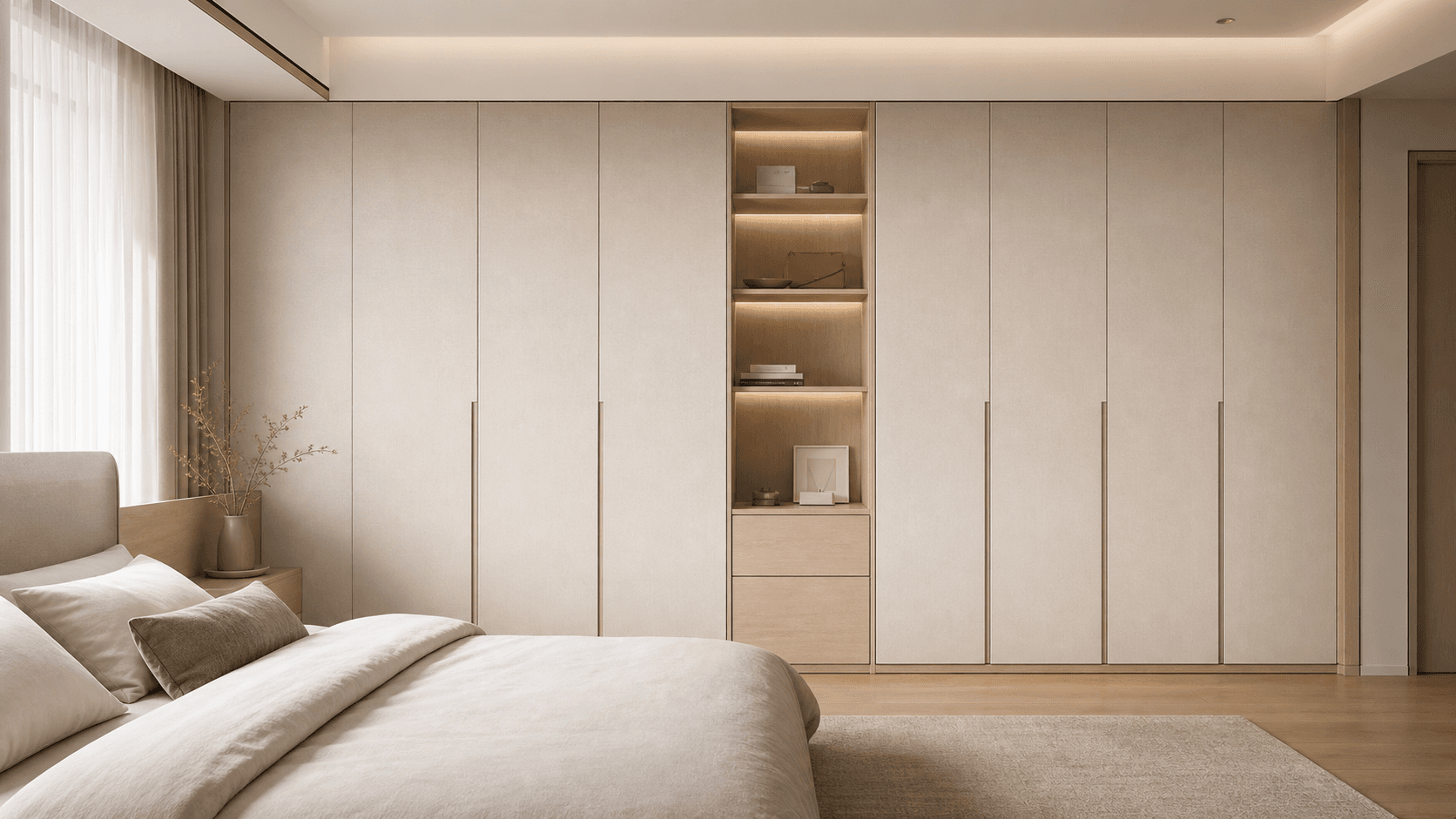
brevi soft-background bedroom wardrobe with beige textile texture and light woodgrain

Soft Background Scheme

Use Constantin Beige Textile for full wardrobe doors, with Xishan White Oak in local open shelves or bedside extensions.

Pairing Collection 02

2 finishes

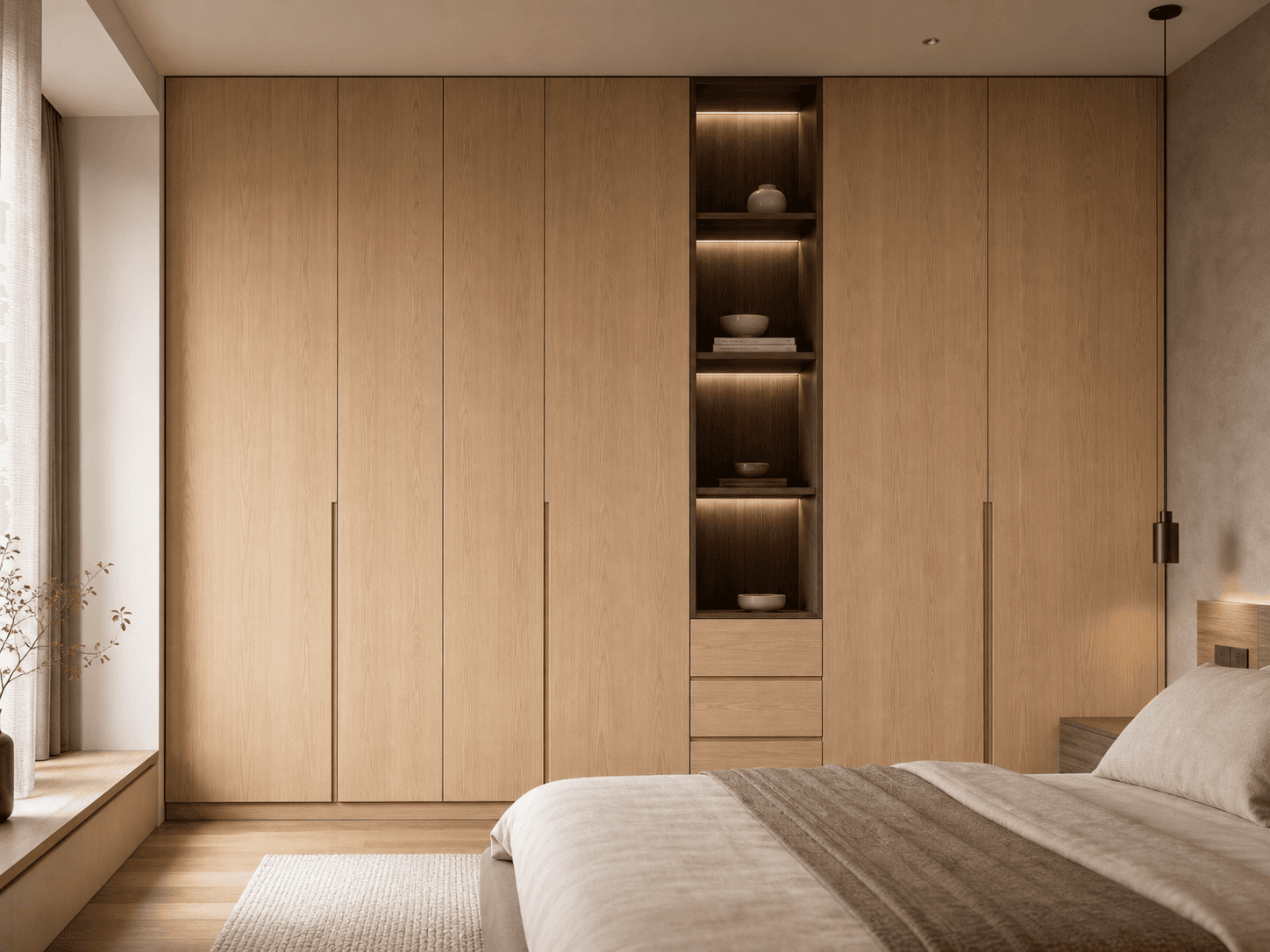
brevi natural-wood bedroom wardrobe with light woodgrain doors and deep coffee walnut lining

Natural Wood Scheme

Use Xishan White Oak as the main cabinet-door surface, with Deep Coffee Thebes Walnut as a small-ratio interior lining.

Material Ratio

Material Proportion Reference

These proportions are an initial selection reference and should be assessed against the actual visible area, adjacent materials, and spatial lighting.

Main cabinet door surface

60%–75%

Form the bedroom's main background surface

Partial open shelves

10%–15%

Add functional depth and display positions

Walls and soft furnishings

15%–25%

Balance cabinetry volume

Selection Check

Selection and confirmation notes

When confirming a finish, review the physical sample, adjacent materials, surface effect, and edge-banding match together.

  1. 01

    Confirm physical samples

    Use images to screen directions; assess color, texture, gloss, and tactile feel with a physical sample.

  2. 02

    Review material relationships

    Compare the decorative surface with adjacent worktops, walls, floors, metal, and other materials under the same light.

  3. 03

    Coordinate matching information

    After confirming the finish, verify the surface, grain direction, edge-banding match, and available product documents.

FAQ

FAQ

Is woodgrain or textile texture better for a bedroom wardrobe?+

Choose light woodgrain for a more natural space. Choose textile texture for a quieter result that reduces cabinetry volume.

Why is matching edge banding emphasized for bedroom wardrobes?+

Wardrobe doors are large, so contrasting side edges are highly visible. Matching edge banding keeps the fronts and sides consistent.

Can dark woodgrain be used on a bedroom wardrobe?+

Yes, but use it in open shelves, linings, or local drawer fronts rather than across a full wardrobe in a small bedroom.

Need to confirm the decorative surface direction for this space?

Share the desired spatial effect, application position, and preferred tone. We can help screen finishes and prepare physical samples.