breviSurface System
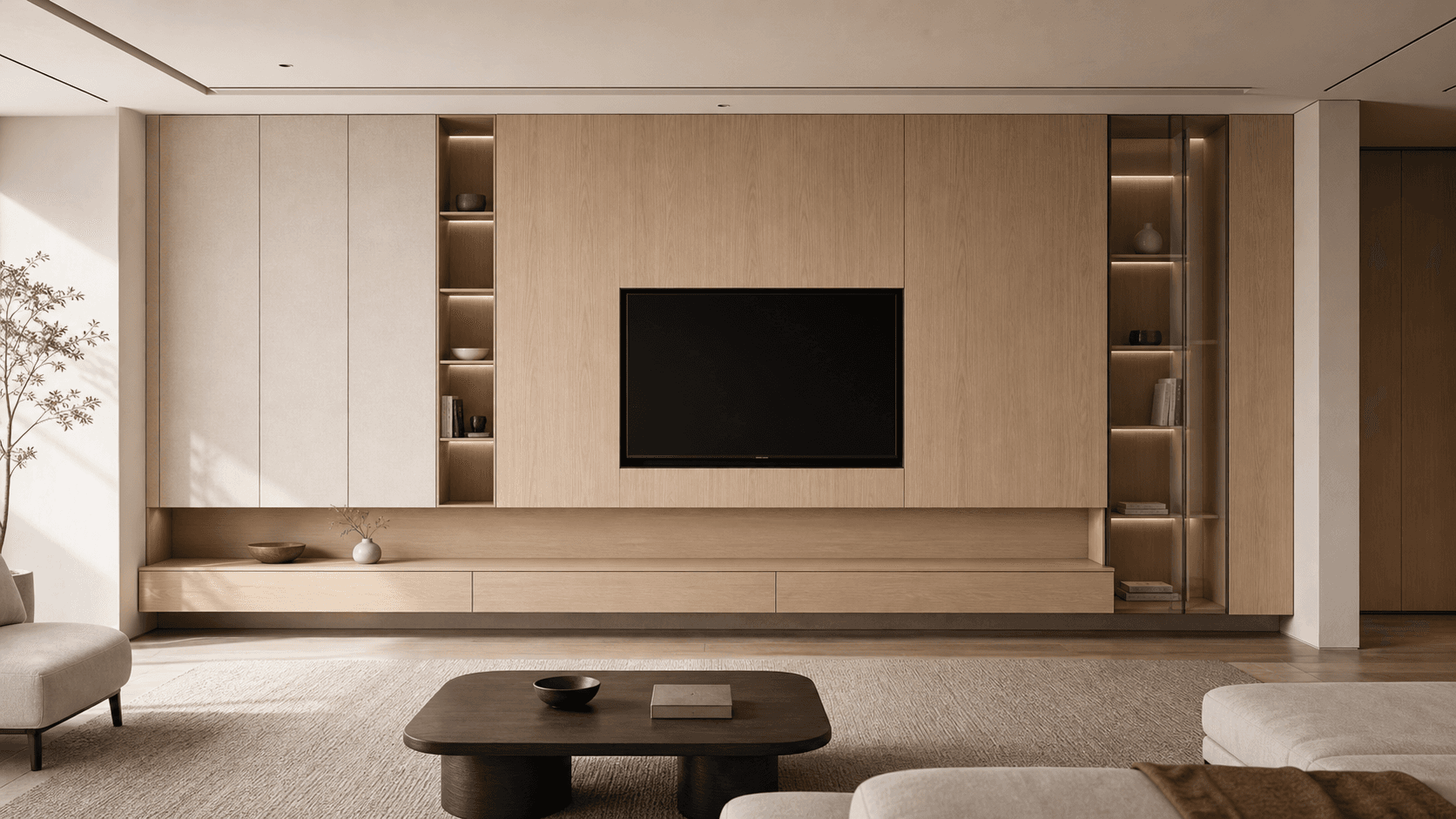
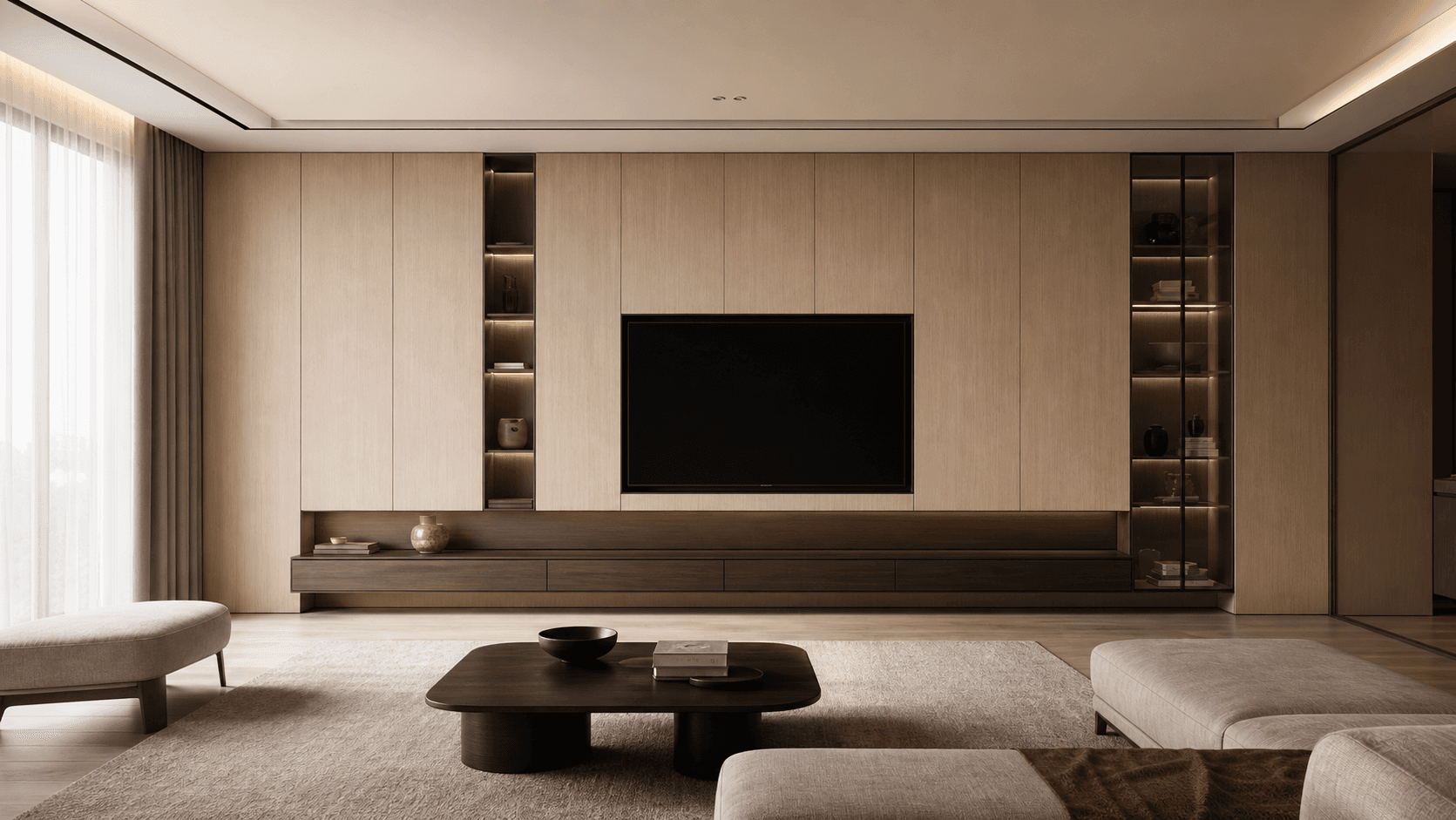
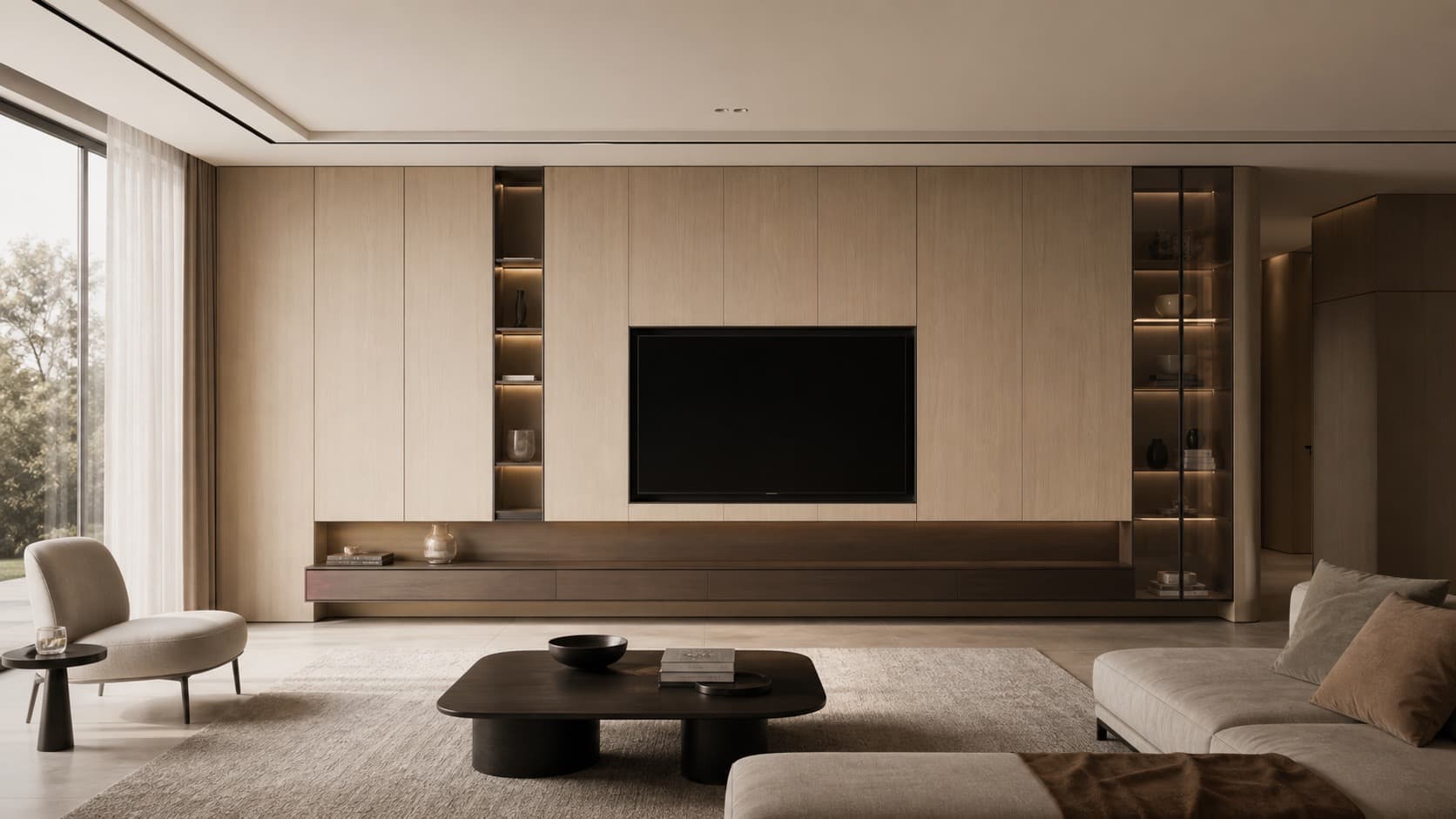
brevi living room system wall decorative surface application

Application Space

Living Room System Wall

Use surfaces to establish the main visual order of the living room.

Keep the large background low-contrast first, then use dark wood, bronze glass, or metal for open shelves and trims.

Suitable Positions

Wall Panels / Background SurfacesFloating Base CabinetsDisplay Open ShelvesTrim Lines

Application Logic

Surface Selection Method

First define each material's position and role in the space, then use finish proportions and physical samples to confirm that the overall combination is balanced.

01Position

Spatial Positioning

Treat the system wall as an integrated facade first: background, storage, display, and equipment positions should be considered together.

  • Confirm background and cabinet boundaries
  • Control the main visual area
  • Integrate storage into the facade
02Material

Surface Logic

Large areas should use low-contrast, low-saturation materials, while dark wood, glass, and metal are better suited to local depth.

  • Light wood works for large areas
  • Textile textures can soften volume
  • Use dark tones for local emphasis
03Confirm

Key confirmation points

Base the final decision on physical samples, surface effects, and matching documents instead of allowing renderings to replace material confirmation.

  • Check physical samples
  • Confirm texture and gloss
  • Coordinate the edge-banding direction

Finish Combinations

Recommended finish combinations

Different finishes can serve as primary, background, and accent materials. Final color, texture, and surface should still be confirmed with physical samples.

Material Ratio

Material Proportion Reference

These proportions are an initial selection reference and should be assessed against the actual visible area, adjacent materials, and spatial lighting.

Wood surface

approx. 30%-45%

Build the main warmth of the living-room facade

Warm gray / sandstone background

approx. 30%-40%

Reduce visual pressure across the full wall

Solid or textile cabinet doors

approx. 10%-20%

Soften the storage volume

Bronze glass and metal trims

approx. 5%-10%

Add local depth and refinement

Selection Check

Selection and confirmation notes

When confirming a finish, review the physical sample, adjacent materials, surface effect, and edge-banding match together.

  1. 01

    Confirm physical samples

    Use images to screen directions; assess color, texture, gloss, and tactile feel with a physical sample.

  2. 02

    Review material relationships

    Compare the decorative surface with adjacent worktops, walls, floors, metal, and other materials under the same light.

  3. 03

    Coordinate matching information

    After confirming the finish, verify the surface, grain direction, edge-banding match, and available product documents.

FAQ

FAQ

Can woodgrain be used across a large living room system wall?+

Yes, but a low-contrast light woodgrain is better as the primary material. Use textile texture, a warm gray background, or glass to reduce the pressure of a full woodgrain wall.

Why is full coverage in dark woodgrain not recommended for a system wall?+

Dark woodgrain has strong visual weight. Before full-wall use, confirm daylight, wall scale, and samples; in most projects it works better for open shelves, trims, or local emphasis.

Which implementation details matter for a living room system wall?+

Focus on joints, light strips, outlets, television equipment, and cabinet-door clearances, and confirm them together during detailing.

Need to confirm the decorative surface direction for this space?

Share the desired spatial effect, application position, and preferred tone. We can help screen finishes and prepare physical samples.