brevi was not created because the market lacked another kind of panel.
Materials should not be understood in isolation.
In a complete interior project, homeowners care about environmental performance, the finished result, and everyday use; designers focus on spatial expression; showrooms guide material selection; furniture manufacturers consider processing and installation; and the supply chain ensures stable material delivery.
Each stage fulfills its own role, but the final result is formed by all of them together.
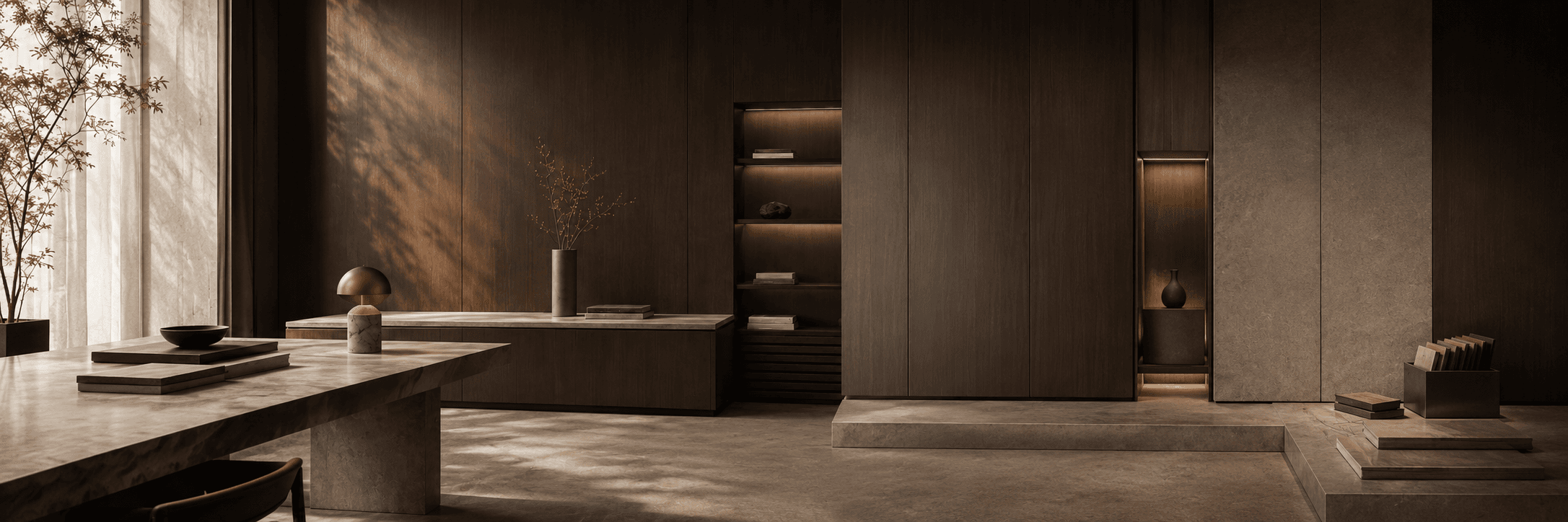
The same finish can look entirely different depending on the substrate, surface texture, grain direction, edge banding, and processing method. Once placed in a real interior, color temperature, illuminance, and the direction of light also affect how people perceive its color, texture, and gloss; different surface textures create different tactile qualities and layers of light and shadow.
A material is never simply a color swatch detached from its environment.
Many problems do not first appear during production or installation; they are already embedded at the moment a material is selected, coordinated, and assigned its intended use.
For that reason, brevi does not seek to add one more material. It seeks to establish a complete selection logic spanning finishes, substrates, surfaces, edge banding, processing, and spatial application, so materials can be understood more fully across design, manufacturing, delivery, and use.