01Position
Spatial Positioning
Kitchen-dining areas are high-use functional spaces, so materials should be enduring, easy to pair, and not overly decorative.
- Limit the number of finishes
- Emphasize functional surfaces
- Maintain clear visual order
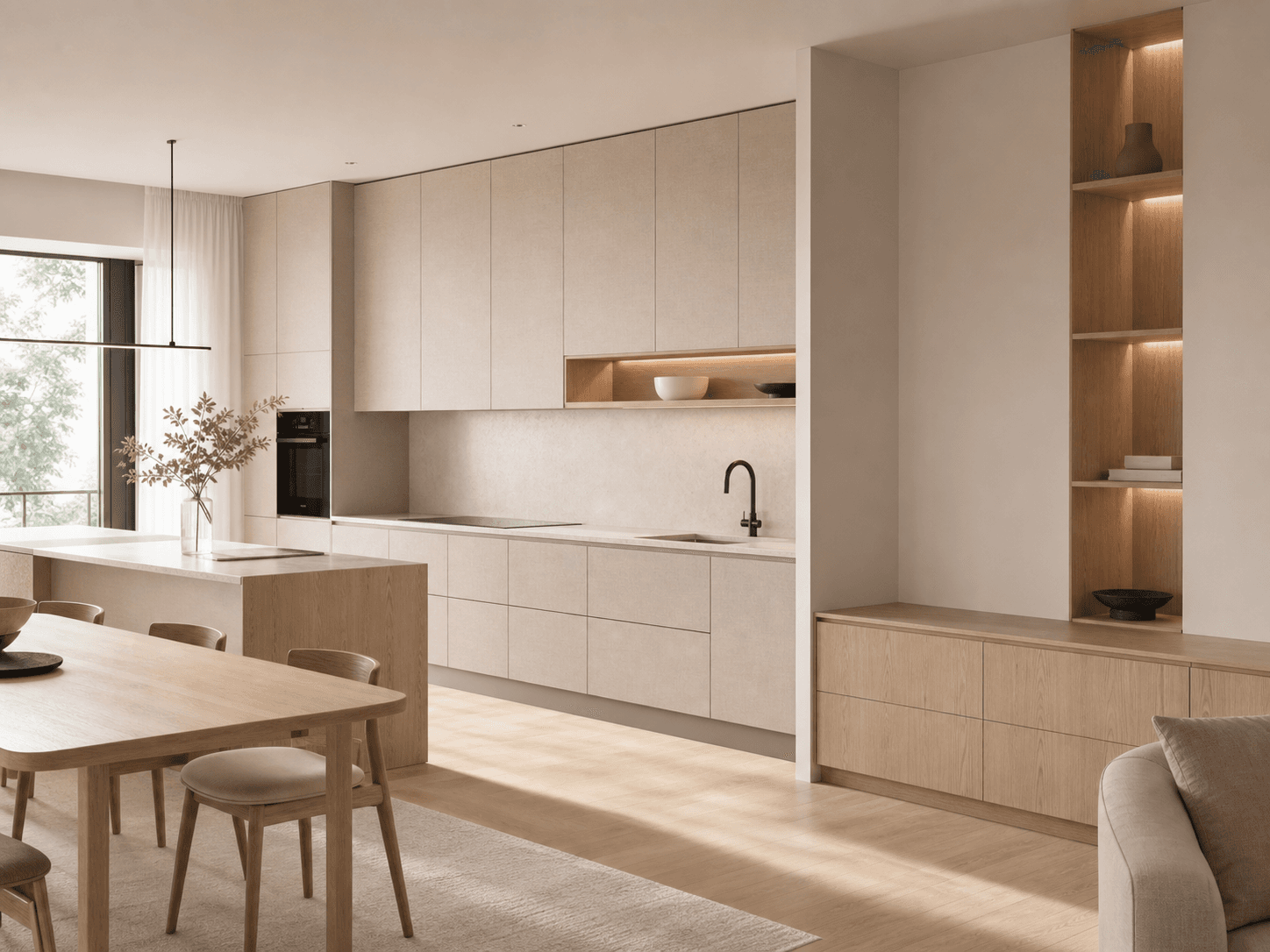
Application Space
Maintain material order in functional spaces.
First clarify the relationship among cabinet doors, worktops, and walls, then use woodgrain or a dark finish for local emphasis.
Suitable Positions
Application Logic
First define each material's position and role in the space, then use finish proportions and physical samples to confirm that the overall combination is balanced.
Kitchen-dining areas are high-use functional spaces, so materials should be enduring, easy to pair, and not overly decorative.
Lighter upper cabinets with darker lower cabinets, or local woodgrain, is a reliable kitchen-dining material strategy.
Base the final decision on physical samples, surface effects, and matching documents instead of allowing renderings to replace material confirmation.
Finish Combinations
Different finishes can serve as primary, background, and accent materials. Final color, texture, and surface should still be confirmed with physical samples.
Pairing Collection 01
2 finishes
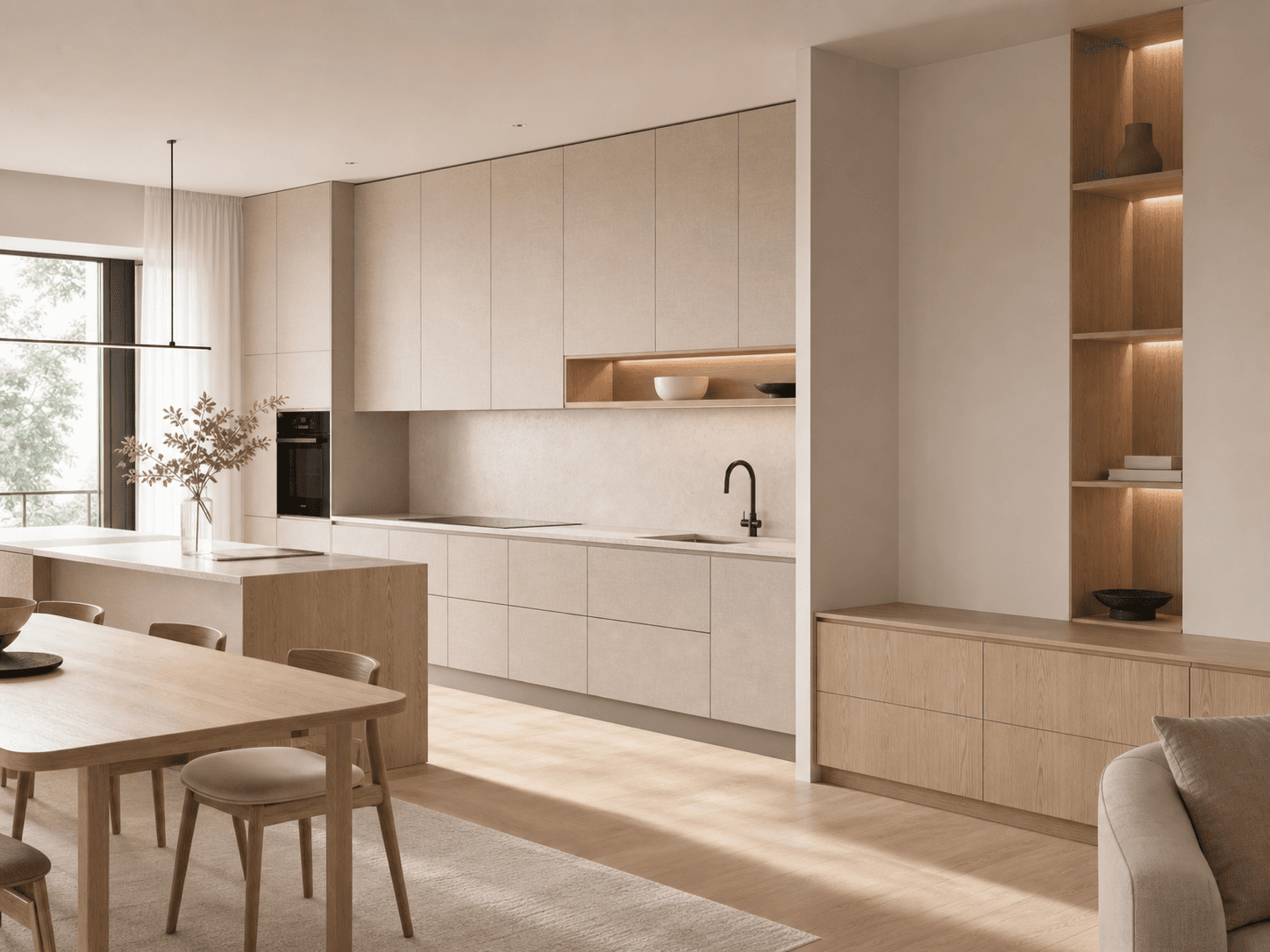
Use Constantin Beige Textile for cabinet doors, with Mountain Brook Oak-2 for sideboards or open shelves.
Pairing Collection 02
2 finishes
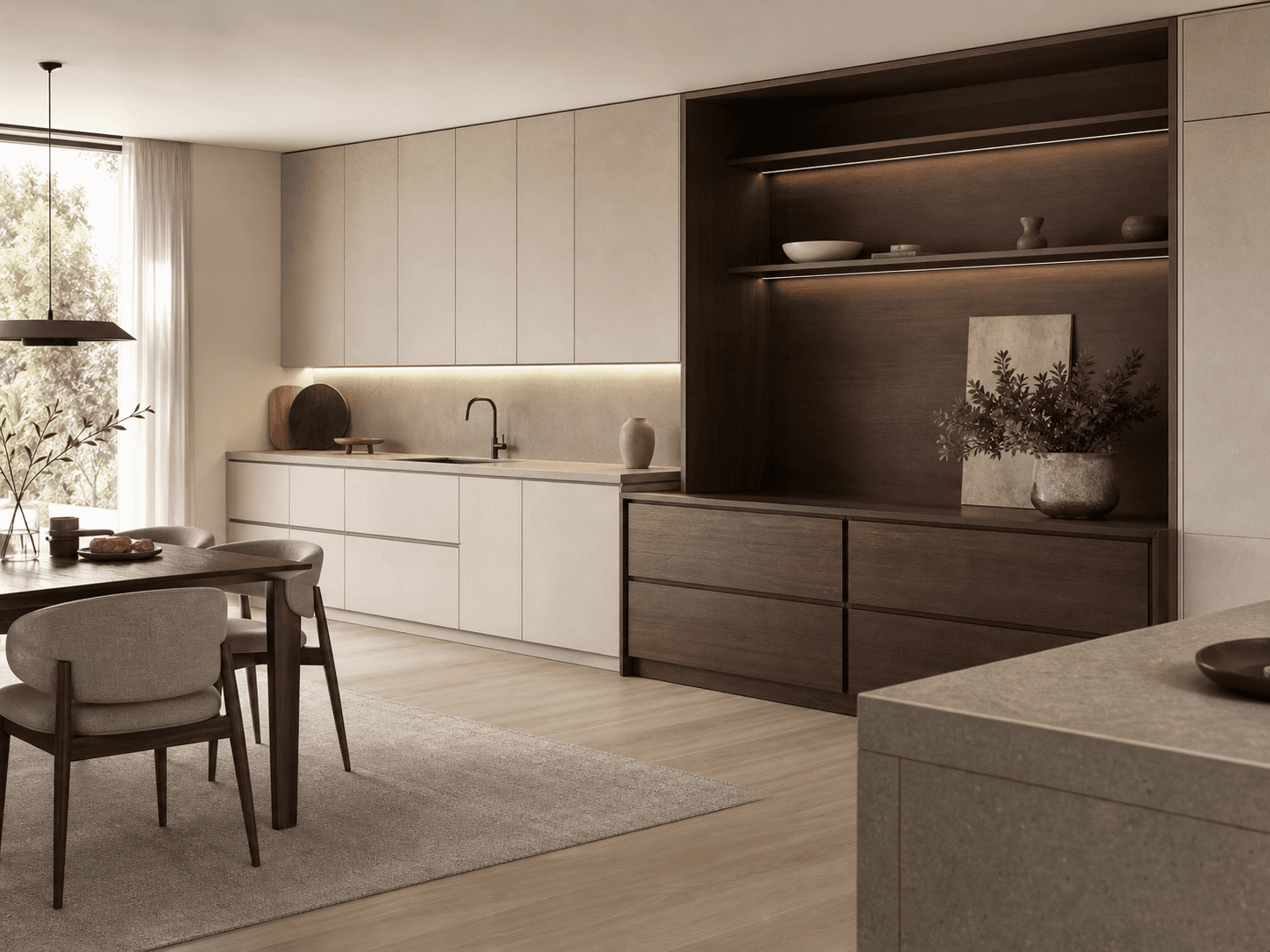
Use Deep Coffee Thebes Walnut as a local accent, paired with light cabinet doors and low-saturation countertops.
Material Ratio
These proportions are an initial selection reference and should be assessed against the actual visible area, adjacent materials, and spatial lighting.
45%–60%
Set the overall kitchen-dining tone
25%–35%
Serve functional and cleanable surfaces
5%–10%
Add display space and depth
Selection Check
When confirming a finish, review the physical sample, adjacent materials, surface effect, and edge-banding match together.
Use images to screen directions; assess color, texture, gloss, and tactile feel with a physical sample.
Compare the decorative surface with adjacent worktops, walls, floors, metal, and other materials under the same light.
After confirming the finish, verify the surface, grain direction, edge-banding match, and available product documents.
FAQ
Yes. Woodgrain adds warmth, but local use or low-contrast grain keeps the kitchen from feeling too heavy.
It is a reliable strategy that keeps upper cabinetry light while giving base cabinets a stable, enduring appearance.
Limit the palette to three relationships: main cabinet doors, worktop and wall surfaces, and local open shelves. Reduce adjacent high-contrast finishes.
Share the desired spatial effect, application position, and preferred tone. We can help screen finishes and prepare physical samples.